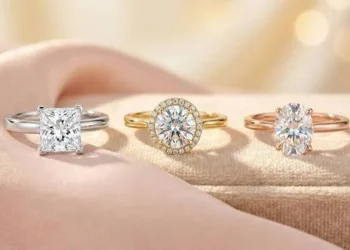



Ask someone selling a diamond for the first time what determines its value. The answer is a given: carat weight. The bigger the better. It is an assumption shaped by decades of jewellery advertising, where size is shorthand for worth.
Manhattan’s Diamond District has a different case. There, stones change hands every day in the secondary market, and that assumption rarely survives an appraisal.
Professionals who sell diamonds New York clients bring in for resale begin with a different question altogether. Before they consider how much a diamond weighs, they want to know how well it performs. Does it return light? Is it proportioned correctly? Will another buyer want it tomorrow, or will it require costly work before it can be sold again?
Carat weight matters, but only after a diamond has cleared several more important hurdles.
The First Judgment Happens Before the Scale
A wholesale buyer’s task differs fundamentally from that of a retail jeweller. Retail pricing reflects craftsmanship, branding and presentation. A resale buyer, by contrast, evaluates how quickly a stone can move through the trade and the level of financial risk that accompanies the purchase.
That calculation begins with a cut.
A diamond that weighs two carats but appears dull under normal lighting may be worth considerably less than a smaller stone that displays exceptional brilliance. In the secondary market, optical performance often determines liquidity, and liquidity, in turn, determines price.
The industry has a motto for this: beauty sells, but brilliance sells faster.
Why Extra Weight Can Become a Liability
Many diamonds retain weight that contributes little to what the eye actually sees.
Some were fashioned with shallow proportions that make them appear broad while allowing light to escape through the base. Others hide unnecessary mass beneath the girdle or deep within the pavilion, producing a heavier stone without increasing its visible size.
These are sometimes described within the trade as carrying “dead weight”. In other words, it is the carat mass that offers little commercial advantage. For buyers, that raises another question. Can the stone be improved through recutting?
If the answer is yes, today’s offer may be based not on its present weight but on the smaller weight expected after excess material is removed. Recutting costs, the anticipated loss of carat weight and the risks involved all become part of the valuation.
Colour and Clarity Are Really Measures of Marketability
Once proportions satisfy the buyer, attention shifts to colour and clarity, not as isolated grades but as indicators of demand.
Colourless and near-colourless diamonds generally move through the market with stronger acceptance. They appeal to a broader range of purchasers. Stones with more noticeable yellow or brown body colour require greater pricing flexibility to secure another buyer.
Clarity follows a similar pattern.
Rather than becoming preoccupied with microscopic distinctions, experienced buyers ask a practical question: is the stone eye-clean?
If inclusions remain invisible during normal viewing, the diamond usually retains strong commercial appeal. When dark crystals, feathers or fractures become visible without magnification, however, buyers must consider not only appearance but also durability. Structural weaknesses can complicate resetting or future resale, increasing both time and financial risk.
The Benchmark That Misleads Many Sellers
Certain carat weights (half a carat, one carat and two carats among them) occupy important psychological and commercial thresholds within the diamond trade.
A diamond weighing 0.96 carats may appear virtually identical to one weighing exactly 1.00 carat, though the market prices those stones quite differently because the latter crosses a recognised benchmark.
The reverse can also happen. Some diamonds exceed a benchmark only because cutters preserved extra weight at the expense of ideal proportions. A poorly proportioned 1.02-carat stone may ultimately be valued closer to its projected post-recut weight than the figure shown on the scale today.
In other words, weight without quality rarely commands a premium.
Seeing a Diamond Through a Buyer’s Eyes
For anyone preparing to sell, understanding this hierarchy changes the conversation.
Instead of focusing solely on carat weight, it is worth asking about table percentage, pavilion depth, girdle thickness and overall symmetry. These measurements reveal how a buyer assesses brilliance and whether recutting is likely to influence the offer.
It also helps to separate the value of the mounting from the value of the stone. Precious-metal settings are generally assessed based on purity and weight, while the centre diamond is evaluated independently on its own commercial merits.
Whether owners consult diamond buyers Midtown East, diamond buyers Upper East Side, or specialists serving collectors in Tribeca, Chelsea, SoHo or the Financial District, the principles remain consistent. The strongest offers usually go not to the heaviest diamonds, but to those whose proportions, optical performance and condition make them easiest to place back into the market.
Carat may dominate popular imagination, but inside the resale trade it is seldom king. The buyers who determine value begin somewhere else entirely with light, proportion and the confidence that another purchaser will recognise those qualities tomorrow.