

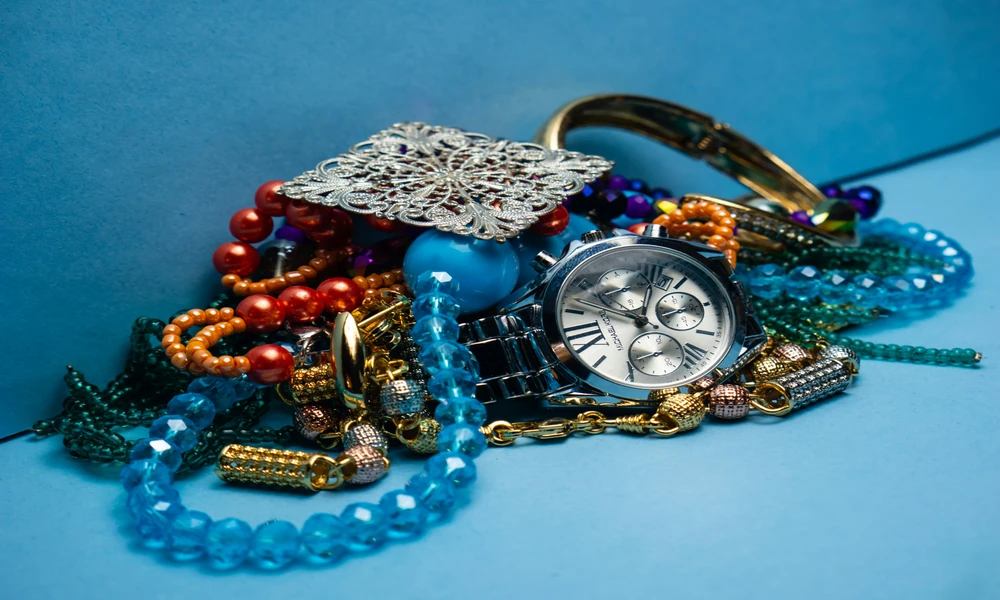
Handcrafted jewellery is partly about the weight, partly the way light catches an imperfect hammered surface differently every time you move. Machine-finished pieces are consistent in a way that handcrafted work deliberately is not. That inconsistency is precisely what people are responding to right now. Textured and artisanal jewellery has been gaining ground on high-polish minimalism for several seasons. Silver has become the metal most associated with this shift, largely because of how well it takes the techniques involved.
Why Texture Has Become the Defining Feature in Contemporary Jewellery
For a long stretch of the 2000s, fine jewellery trended toward geometric precision and mirror-bright polish. That aesthetic still exists, but the conversation has moved on. Granulation, hand-hammering, reticulation, and oxidised finishing now carry real weight, valued for the evidence of a maker’s process.
Designers describe texture as giving a piece its “voice,” the quality that makes it read differently at arm’s length than up close and rewards discovery. Silver jewellery on AJIO reflects this breadth, from silver bracelets kadas with beaten surfaces to rings with granulated detailing.
Artisanal Techniques and Their Visual Signatures
| Technique | Visual Result | Metal Suitability | Price Tier |
|---|---|---|---|
| Hand-hammering | Faceted, light-catching surface | Silver, brass, gold | Entry to mid |
| Granulation | Tiny fused spheres on the surface | Silver, gold | Mid to high |
| Reticulation | Organic wrinkled texture from heat | Silver | Mid |
| Oxidisation | Darkened recesses enhancing depth | Silver, copper | Entry to mid |
| Hand engraving | Intricate etched linework | Silver, gold | Mid to high |
Kadas and Cuffs: Where Craft Meets Wearability
The kada is a good example of a traditional form absorbing contemporary craft techniques without losing its essential character. Its wide band gives the maker real surface area to work with, and the structural presence means craftsmanship reads immediately when worn. Silver bracelets kadas on AJIO move between modernist profiles and heavily engraved pieces referencing regional Indian craft traditions.
Narrower profiles work under jacket cuffs without any awkwardness, and oxidised finishes suit both formal and relaxed dressing. For those building a collection of silver jewellery, the kada offers considerable visual return at a price point well below gold alternatives of comparable craftsmanship.
To Wrap Up
Artisanal texture is one of the more enduring directions in contemporary jewellery, and silver is the metal most associated with it. AJIO stocks 1000+ pieces of silver jewellery across styles and price points. Additionally, you also have the benefit of returning the product within 30 days of delivery if it does not suit your requirements.
FAQs
1. How do I care for the texture on a hand-hammered silver piece?
Ultrasonic cleaners can blur fine surface detail. A soft cloth and gentle silver polishing cream in light circular strokes preserves the finish without wearing down the texture.
2. Do oxidised silver kadas need special storage?
Individual anti-tarnish pouches, kept away from other metals, prevent scratching and slow the natural lightening that can occur on oxidised surfaces over time.
3. Is artisanal silver more expensive than machine-made pieces?
Often not. Silver’s lower metal cost relative to gold means pieces requiring considerable hand labour can still sit at accessible mid-range price points.
4. Can heavily textured silver pieces be resized?
Resizing is possible but more involved than with plain-band pieces, since the craftsperson must preserve the surface detail around the altered section. Worth confirming with the seller before purchasing.
5. What makes granulation different from other surface textures?
Granulation fuses tiny spheres of the same metal onto the base surface using heat, with no solder involved. The bond is technically difficult to achieve cleanly, and the resulting texture catches light at multiple angles in ways other techniques rarely replicate.