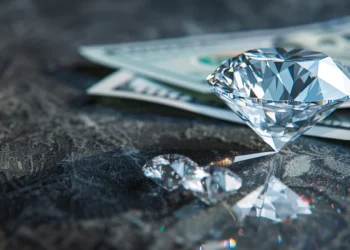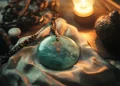


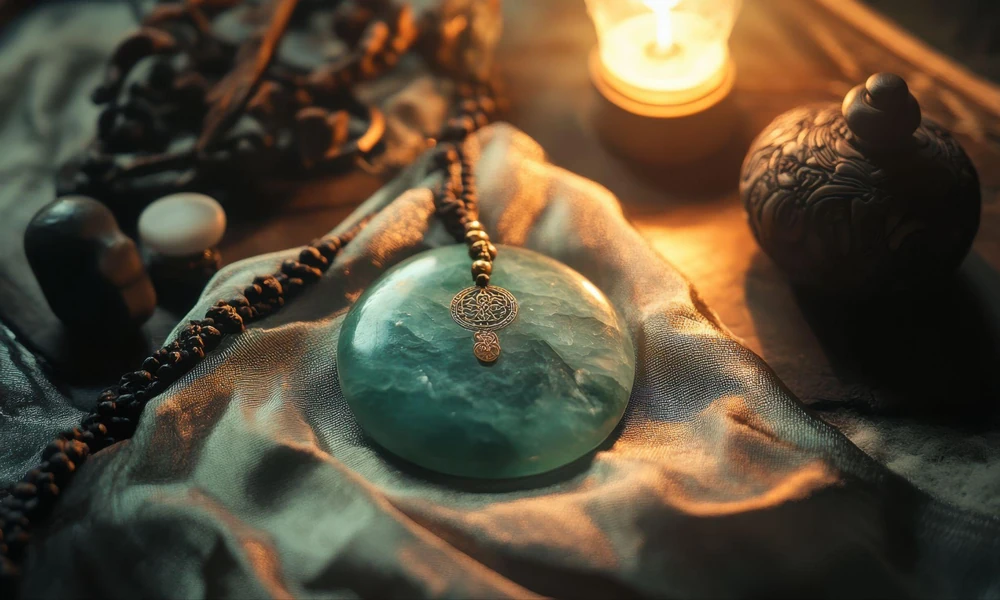
Hold a diamond up to the light, and it fractures the light into brilliance, sharp, sparkling, mathematically precise. Hold a fine piece of jadeite up to that same light and something entirely different happens, the light doesn’t scatter so much as sink into the stone and glow back out, soft and alive. That difference isn’t incidental. It’s exactly why jadeite gets judged by a completely different set of standards than a diamond ever could be.
Two Stones, Two Entirely Different Languages of Value
Laid out side by side, the contrast in what actually determines a stone’s worth becomes considerably clearer:
| How a Diamond Gets Graded | How Jadeite Gets Judged | |
| Primary focus | Cut, clarity, colour, carat, measured against fixed scales | Translucency, colour, texture, evaluated together as a whole |
| How light behaves | Brilliance and fire from precise faceting | A soft glow from light passing through the stone itself |
| What’s being assessed | Mathematical precision of the cut | The living quality of the material, often called “the water” |
A diamond’s value can largely be reduced to numbers on a certificate. Jadeite resists that kind of reduction; its worth is something closer to a quality you have to actually see and hold to properly appreciate.
Why Translucency Matters More Than Almost Anything Else
In jade evaluation, translucency, how deeply and evenly light travels through the stone, often carries more weight than colour alone. A piece with a rich, saturated green but a flat, opaque surface can be worth considerably less than a paler stone that glows with genuine depth when light passes through it. This is a fundamentally different way of looking at a gemstone, prizing the material’s inner life over its surface colour alone, and it’s precisely the quality traditional jade connoisseurs have prized for centuries.
Why This Distinction Actually Matters When Choosing a Piece
Walking into any Jade shop in Singapore with diamond-grading instincts, chasing the most saturated colour above everything else, can mean overlooking the translucency and texture that genuinely define a fine piece of jadeite. Understanding what actually makes a stone exceptional in this tradition changes what to actually look for once you’re standing in front of the real thing.
Why a Pendant Specifically Calls for This Kind of Careful Evaluation
A pendant sits close to the skin, catching natural light throughout the day in a way a ring or earring often doesn’t quite manage in the same continuous way. That constant exposure to shifting, ambient light makes translucency considerably more apparent over time than it would be in a piece viewed only occasionally under jewellery-store lighting. A pendant with genuine depth rewards this daily exposure, revealing more of its character the longer it’s actually worn and watched.
Why Type A Jadeite Specifically Preserves This Quality
Untreated, natural jadeite retains the stone’s genuine translucency and texture exactly as it formed, while treated stones can be artificially enhanced in ways that mask or distort those same qualities. A genuine jadeite pendant crafted from Type A material carries the stone’s true character intact, the very quality that makes jadeite worth evaluating on its own terms in the first place.
Why This Grading Tradition Rarely Gets Explained Outside Jade Circles
Diamond grading has become widely understood shorthand; most people can roughly explain what the four Cs mean even without much jewellery background. Jade’s evaluation criteria remain considerably more specialised knowledge, passed down through generations of jade traders and collectors rather than codified into a single universal scale. That’s not a flaw in the tradition; it simply reflects a stone that was always meant to be appreciated by eye and by hand, not reduced entirely to a certificate.
A diamond dazzles the instant light hits it. Jadeite asks for something slower, a willingness to actually look into the stone rather than just at its surface. Understanding that difference is really the first step toward recognising what makes a genuinely fine piece of jadeite worth its place in a collection.
Ready to see genuine translucency for yourself? Contact Gen.K Jewelry to explore the collection in person.